
Backlinks
Backlinks Explained: The Key to SEO Success and Rankings
Backlinks are links from other websites that point to yours. Search engines use them to judge how trustworthy and valuable your content is. When solid, reputable sites link to you, it signals that your content is worth paying attention to. That’s why backlinks remain one of the strongest factors in how well your pages rank.
Trusted SEO sources like Moz and Ahrefs consistently show the same pattern. Quality backlinks usually mean better rankings and more organic traffic.
Understanding how backlinks work helps you strengthen your SEO strategy and grow your visibility online.
Why It Matters
- Your website needs links from other sites to rank well on Google and AI-driven search.
- Backlinks act as trust signals. Quality beats quantity every time.
- The best links come from websites relevant to your industry or location.
What Are Backlinks?
A backlink is simply a hyperlink from one website to another. When someone links to your content, it acts as an online recommendation. Search engines treat high-quality backlinks as evidence that your content is credible and worth ranking.
Backlinks are different from:
- Internal links which connect pages within your own website.
- External links which point from your site to another site.
- Backlinks which come from other sites to yours and carry the most SEO weight.
| Link Type | Origin | Destination | SEO Value |
|---|---|---|---|
| Internal Link | Your site | Your site | Helps structure and indexing |
| External Link | Your site | Another site | Adds context and credibility |
| Backlink | Another site | Your site | Builds authority and ranking potential |
Types of Backlinks
Backlinks come in a few main forms:
- Dofollow links, which pass ranking value.
- Nofollow links, which don’t pass authority but can still bring traffic.
- Editorial links, earned naturally when someone references your content.
- Guest post links, earned by contributing content to another site.
- Directory links, usually low value unless the directory is reputable and niche-specific.
The best backlinks come from relevant, authoritative websites that actually make sense in your industry.
Why Backlinks Matter for SEO

When another website links to you, it tells search engines that your content is valuable. Search engines treat these links as votes of confidence. The stronger the vote, the better your chances of ranking.
How Backlinks Influence Rankings
Google pays close attention not just to the number of sites linking to you, but the quality and uniqueness of those sites. One link from a respected industry source carries far more weight than dozens of low-quality links.
Backlinks also help Google discover and index your pages faster when they come from sites that are crawled frequently.
The Role of Authority
Google’s PageRank system is built around how authority flows from one page to another. When a high-authority site links to you, a portion of its authority is passed along.
SEO tools like Moz, Ahrefs, and Semrush estimate this authority with metrics such as Domain Authority or URL Rating. They’re not official Google scores, but they are useful for measuring link quality.
Backlinks and Organic Traffic
A strong backlink can do two things:
- Send direct referral traffic from the linking website.
- Improve your rankings so you get more organic search visits over time.
Even a single high-quality backlink can produce a measurable lift in traffic.
Qualities of a High-Quality Backlink
Not all backlinks are created equal. The best links share a few traits.
Topical Relevance
The linking site should cover topics related to your business. A link from a respected SEO or marketing source to an SEO article makes sense. A link from a random hobby blog does not.
Google heavily values topical alignment.
Domain Authority and Trust
Links from sites with strong content, real traffic, and good editorial practices pass more value. Links from thin, low-quality, or spammy sites can hurt you.
Anchor Text
Anchor text is the clickable text in a link. It should be natural and relevant. A healthy backlink profile uses a mix of:
- Branded anchors
- Partial-match anchors
- Generic anchors
Avoid repetitive, over-optimized anchors.
Dofollow and Nofollow
You want a natural mix. Dofollow links help with rankings. Nofollow links still help with traffic and brand visibility. Paid links, ads, or user-generated links should usually be nofollow.
Effective Link Building Strategies

Real link building isn’t about tricks. It’s about useful content, genuine relationships, and consistency.
Create Content Worth Linking To
Strong content attracts links naturally. Examples include:
- Original research
- Detailed guides
- Case studies
- Comparison tables
- Clear visuals or infographics
Share your content through email, social media, and outreach so people actually see it.
Guest Blogging and Outreach
Writing for industry-relevant blogs is still an effective way to earn quality links. Focus on real websites with actual audiences and proper editorial standards. Keep your links contextual, not forced.
Broken Link Building
Find broken links on related sites and offer your content as a replacement. It helps their site and earns you a link at the same time.
Infographics and Testimonials
Infographics are shareable and often earn links. Testimonials can also work well, since many companies link back to the businesses that provided them.
Backlink Analysis and Tools
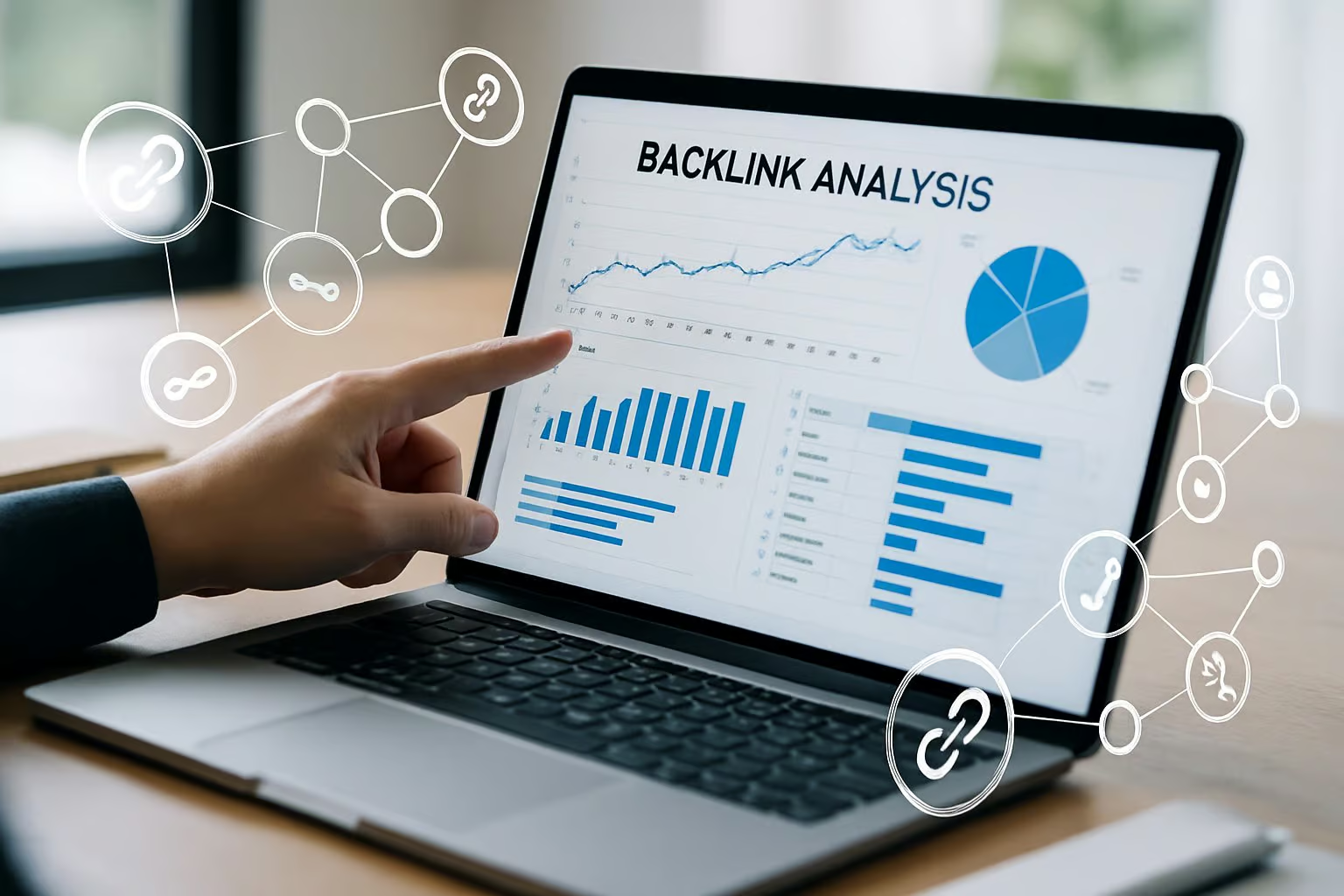
Checking your backlinks often helps you spot new opportunities and catch low-quality links before they harm your rankings.
Assessing Your Link Profile
A healthy backlink profile has:
- A mix of dofollow and nofollow links
- Natural anchor text variation
- Links from reputable, relevant websites
Tools like Ahrefs, SEMrush, and Google Search Console show referring domains, anchor text, and link growth over time.
Useful Backlink Tools
| Tool | Key Feature | Cost |
|---|---|---|
| Google Search Console | Free backlink data | Free |
| Ahrefs | Deep backlink and competitor analysis | Paid |
| Moz Link Explorer | Domain authority metrics | Paid |
Monitoring and Improving Backlinks
Set periodic reminders to review your backlinks. Look for:
- New valuable links
- Lost links worth reclaiming
- Toxic links to disavow
Tools like BuzzSumo can help you find unlinked brand mentions that you can convert into backlinks.
Ready to Strengthen Your Website’s SEO?
If you want higher rankings, more organic traffic, and a backlink strategy that actually works in today’s AI-driven search landscape, we can help.
At Canadian Web Creations, we handle everything from technical SEO to content planning and ethical, sustainable link building.
Get Started Today
Share your goals with us and we’ll build a focused SEO plan that fits your business, your industry, and your budget.